
Buggies for city, country and travel
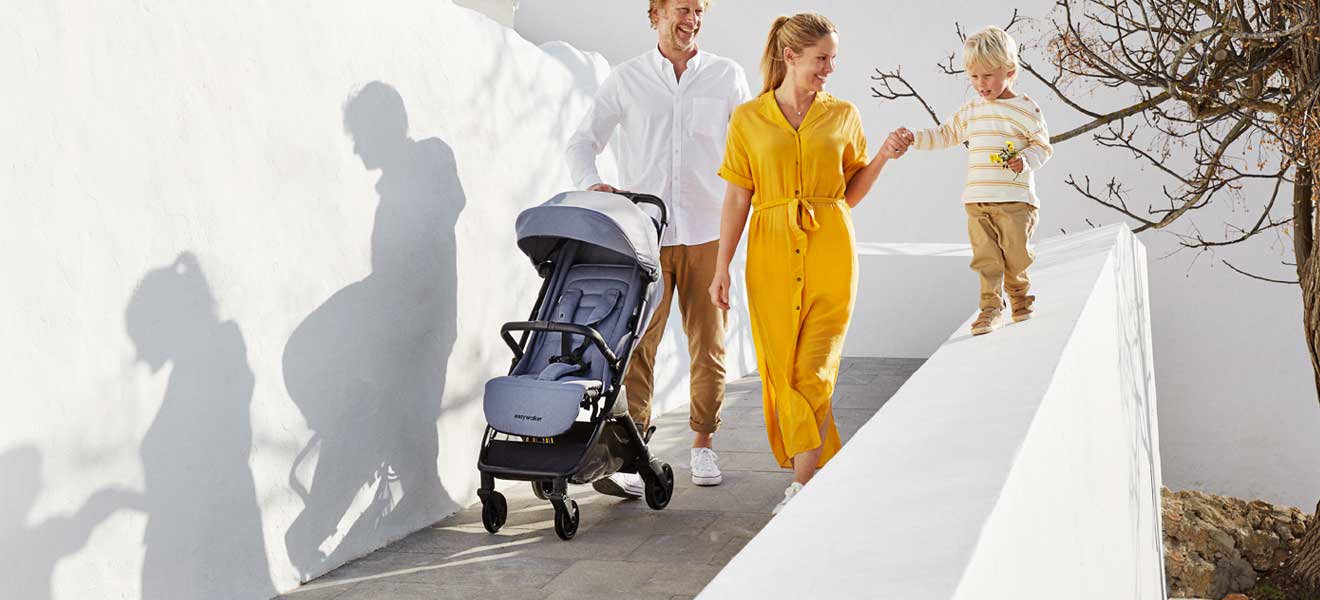 The buggy is a true all-rounder; it's lightweight, compact, comfortable, foldable, and can be taken anywhere. Its flexibility makes it an indispensable companion in everyday life.
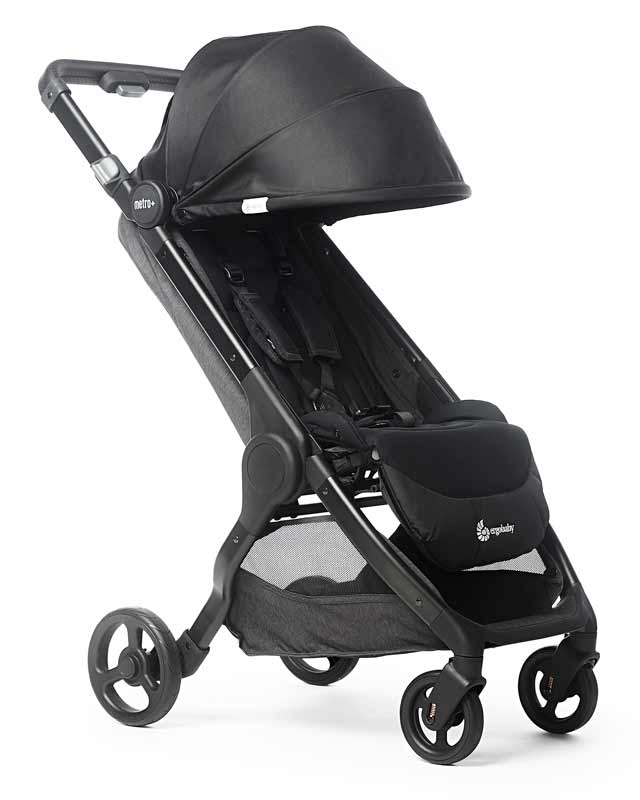

Which buggy should I buy?
Some buggies can be used right from birth, like the Bugaboo Fox Cub stroller. This way, you have a compact and smaller stroller from the start, which you can easily convert back into a buggy later. These buggies are simply added with a bassinet and can therefore also be used for newborns.
When you're out and about in the countryside or in the woods, a buggy should be particularly comfortable and offer good suspension. Therefore, a buggy with air-filled tires is a good choice, as it offers the highest level of comfort when traveling on uneven terrain.
If you're planning a flight or car trip soon, an ultra-compact and small travel buggy like the Ergobaby Metro 3 Deluxe is a great help, since you already have enough luggage when traveling with your baby. These buggies fold up very small and are particularly lightweight. Some buggies can now be folded so small that they can be taken on board as carry-on luggage.
When does it make sense to buy a buggy?
When your child can sit securely and stably on their own for extended periods, it makes sense to buy a buggy. You'll also notice that your increasingly mobile baby no longer wants to be carried around in the bassinet. This will soon only be necessary for sleeping. They now want to explore the exciting world around them and are extremely curious, and sitting upright is clearly fun for them.
When can my baby sit in a buggy?
A buggy is only used when the baby can sit independently and freely for extended periods. This means they should truly be able to sit actively on their own without needing to hold on or support themselves. Their back muscles must be well-developed for this. This is usually the case around 7 to 10 months, but it varies considerably from child to child.
The advantages of a buggy
- Small and maneuverable
- Lightweight
- Quickly and easily foldable and stowed
- Compact - takes up little space in the trunk
- Small wheels for a small turning radius in tight spaces
Using a buggy and stroller in combination
As long as your little one is very small, you can simply use the buggy alongside your regular Stroller. If you need the compact, quick folding mechanism, maneuverability, and smaller size of a buggy, then this is the one to use. For car trips, tram rides, and quick shopping trips, a buggy is simply more practical. You can also attach the infant car seat to the buggy with the appropriate adapter – this way, your baby can continue sleeping peacefully while you do your shopping. Your little one doesn't have to be taken out of the car seat and woken up for transfers. And of course, the space-saving, lighter buggy might come in handy for your first longer holiday. For long walks or extended naps, you can easily bring out the larger, more comfortable pram. Therefore, purchasing a comfortable yet compact buggy in addition to a combination pram definitely makes sense. This allows you to choose between the two options based on your needs and practicality. Once your child can walk independently and confidently, the buggy will likely completely replace the combination stroller.
Where do you mainly use the buggy? If you use the buggy almost exclusively in the city, smaller wheels made of abrasion-resistant hard rubber, lightweight EVA, or puncture-proof air-filled tires are ideal. If you often travel on rougher terrain, such as in the forest or in the countryside with bumpy dirt and gravel paths, only a buggy with larger pneumatic tires, air-filled tires, or lightweight foam-filled rubber tires will do. In these cases, all wheels should have excellent suspension. The choice of wheels also depends heavily on the ground conditions in your immediate neighborhood and surrounding area. If your neighborhood has very uneven or damaged sidewalks and high curbs, larger pneumatic or air-filled tires are a better option. These also cushion the vibrations when maneuvering the buggy over curbs or steps.

Buggy in the car - should it be folded often?
If you travel by car daily and need to fold and unfold the buggy quickly and easily several times a day, a compact buggy with not-too-large wheels and a quick, easy folding mechanism is perfect.
 Do you often use public transport?
If you travel by bus, tram, etc. every day, your buggy needs a simple and quick one-hand folding mechanism – it should be able to be folded with just one hand. This way, you can operate it while holding your child. Of course, the buggy shouldn't be too heavy for comfortable carrying. It's also very useful if the folded buggy can stand upright on its own, like the Joie Litetrax Pro Buggy - then you can simply park it without worry.
Should your child sleep in the buggy?
If your little one is going to sleep regularly in the buggy, a very flat reclining position is an absolute must. With some buggies, the backrest can only be reclined to a slightly flatter position, so be sure to check for information about the flat reclining function. The Joolz Aer 2 buggy, for example, features a flat reclining position where your little one can easily take a nap. These are the points you should consider when buying a buggy. 1. Wheels

For comfortable riding, the buggy's wheels shouldn't be too small, allowing it to easily overcome obstacles like steps or cobblestones. Ideally, the rear wheels are slightly larger than the front wheels – this makes the buggy usable almost anywhere.
For the mostly flat and smooth surfaces in the city, shops, and on public transport, hard rubber/plastic wheels are perfectly adequate. Except on cobblestones – here you can only really get around well with air-filled or pneumatic tires.
2. Suspension
Some suspension is simply essential for a buggy. Even if you use it almost exclusively in the city, at least slightly sprung wheels are a must. When going over curbs or even small steps, the jolting would be extremely unpleasant for the child sitting in the buggy without any suspension. A buggy with suspension is also much easier and smoother for the person pushing it, and their arms don't have to absorb the shocks unfiltered.

3. Backrest
Ideally, the buggy's backrest should have multiple adjustment options, including a fully reclined position. In a reclining buggy, the child can sit upright or slightly upright, but also comfortably. If the child is very young, the reclining position should be as flat as possible. Please pay close attention to the specifications – the angle of the flattest reclining position can vary considerably between buggy models.
4. Sunshade
The buggy canopy protects the little passenger from sun, rain, wind, and unwanted views. The larger the sunshade, the more protection it offers your child. A large canopy that extends low provides the best sun protection on the go. Many sunshades can be extended with a zipper – the extended canopy then protects almost the entire child from the sun's rays. One or more separately opening viewing windows in the canopy allow you to keep an eye on your child at all times.
5. Folded Size
The folded size of the buggy is one of the most important aspects when buying the perfect buggy. The smaller and more compact the buggy is when folded, the more flexible it is to use. It then takes up less space in the trunk, which is especially important when going on vacation.
There are even buggies with integrated carrying straps, like the Cybex Orfeo buggy, which you can carry over your shoulder like a bag. Some buggy models can even be taken on board as carry-on luggage.
6. Parking Brake
The buggy needs a well-functioning brake – the so-called parking brake. This means that the brake is locked after being engaged, and the buggy remains firmly and securely in place. There is the foot brake, which is located at the front of the frame, either in the middle or on the side, on most buggies. It is pressed down with your foot and then locks the buggy. This allows it to be parked safely without rolling away on its own.
7. Weight
For easy handling, the buggy should weigh a maximum of 10 kg. This is especially important if it needs to be folded and stored in the car or carried frequently. For carry-on luggage on an airplane, the buggy should weigh around 6 kg. If you rarely use the folding mechanism to store the buggy, an extra 1 or 2 kg won't make much of a difference.
8. Five-point harness and safety bar
A comfortable, easy-to-use, and safe five-point safety harness is an important aspect when buying a new buggy. The harness should be easy and straightforward to put on. It should keep the child securely in the buggy seat – even if they try to wriggle free. The upper body straps near the neck must be padded, as the risk of chafing from the rather stiff, thin straps is very high.
A safety bar is standard equipment on most buggies. For some buggies, the bar can also be purchased separately as an accessory. The bar is primarily intended to hold and support the child while riding. You can also attach small toys to the handlebar to keep your child occupied.
 9. Push Handle
A comfortable, soft covering for the entire handle (including the side bends) feels more pleasant to the touch and prevents the cold from the metal handlebar from penetrating as much in winter. The handle covering can be made of rubber, foam, or even fine leather, depending on the price range.
Height-adjustable handlebars are also very useful – this way, the stroller's pushing height can always be adjusted to the person pushing it.
 10. Shopping Basket
Most strollers have a basket under the seat. These vary greatly in size and sturdiness.
If you often do your daily shopping and other errands with your child in the buggy, you definitely need a large, sturdy storage basket. It should be easily accessible from at least two sides.
11. Padding / Material
The backrest, seat, and leg rest should be very well and evenly padded. This means that when you press firmly with your hand/fingers, you should feel distinct padding under the cover fabric, not the hard frame. The cover material should be soft and comfortable against the skin—especially in summer, a sweaty child shouldn't stick to it uncomfortably. The cover fabric shouldn't rub too much against clothing or skin—it shouldn't be too coarsely woven or have a stiff feel. A removable cover is a practical feature, as you can easily wash it if it gets heavily soiled with chocolate ice cream or other stains.